
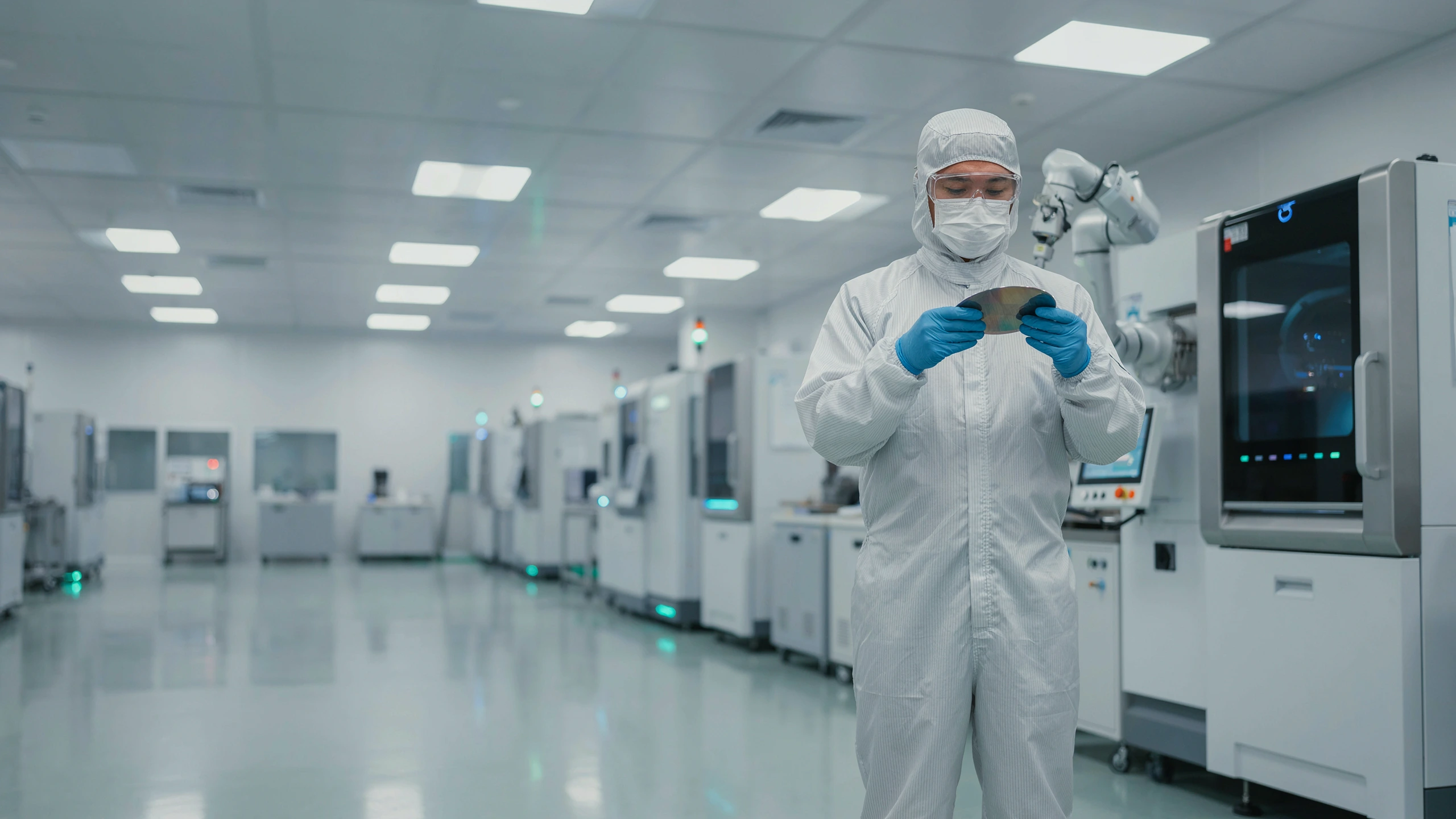
Introduction to Semiconductor Manufacturing Training
The Growing Demand for Semiconductor Professionals
The global semiconductor industry is experiencing unprecedented growth. From smartphones and electric vehicles to artificial intelligence systems and medical devices, semiconductors power nearly every aspect of modern life. This explosive demand has created a critical skills gap, with companies worldwide competing for professionals who understand the complexities of chip manufacturing.
Why Comprehensive Training Matters
Breaking into this complex field requires more than just enthusiasm. Professionals need deep, practical knowledge of the entire manufacturing ecosystem. The Semiconductor Manufacturing Master Training Program from GxP Trainings provides exactly that, taking you from raw silicon to packaged chips across thirty comprehensive modules.
What You Will Learn in This Semiconductor Course
Semiconductor Physics and Materials Science
Understanding the fundamental principles of semiconductor behavior is essential for any professional in the industry. This module covers the energy band model, doping concepts, and the properties of materials including silicon, gallium arsenide, and silicon carbide.
Wafer Manufacturing and Preparation
The journey begins with crystal growth. You will learn about the Czochralski technique, wafer slicing, lapping, etching, and polishing processes that transform raw silicon into wafers ready for device fabrication.
Cleanroom Technology and Contamination Control
Contamination is the enemy of semiconductor manufacturing. This module covers cleanroom classification, design principles, particle monitoring, and the contamination control strategies essential for achieving acceptable yields.
Unit Processes in Semiconductor Fabrication
The core of the program covers every critical unit process:
- Photolithography – pattern transfer using masks and photoresist
- Oxidation – growing high-quality silicon dioxide layers
- Diffusion and Ion Implantation – introducing dopants to control conductivity
- Thin Film Deposition – CVD, PVD, and advanced deposition methods
- Etching Technologies – wet and dry etching for pattern transfer
- Chemical Mechanical Planarization – achieving global wafer flatness
Metrology, Inspection, and Process Control
You will learn measurement techniques for film thickness, critical dimensions, and defects. The module covers interferometry, ellipsometry, scanning electron microscopy, scatterometry, and the role of metrology in maintaining process control.
Process Integration for CMOS and Advanced Nodes
CMOS technology is the backbone of modern electronics. This module covers well formation, shallow trench isolation, gate formation, source-drain engineering, and the integration of bipolar and BiCMOS technologies.
Yield and Reliability Engineering
Yield is the most important financial factor in semiconductor manufacturing. You will learn about yield modeling, defect density, yield improvement strategies, and reliability engineering including TDDB, electromigration, and hot carrier injection.
Testing, Assembly, and Packaging
From wafer probe to final test, this module covers the testing strategies that ensure only good devices reach customers. You will learn about automated test equipment, probe cards, package types including BGA and CSP, and attachment methods including wire bonding, TAB, and flip-chip.
Quality Management and Statistical Process Control
Quality is essential for business success. This module covers ISO 9001, control charts, process capability, and continuous improvement methodologies including the Deming cycle and 8D problem solving.
Environmental Health and Safety in Semiconductor Manufacturing
Protecting workers and the environment is paramount. You will learn about hazardous materials management, air emissions, wastewater treatment, and the regulatory frameworks including ISO 14001 and SEMI S2 standards.
Emerging Technologies and Future Trends
The semiconductor industry never stands still. This module covers extreme ultraviolet lithography, gate-all-around transistors, nanosheet devices, high-k metal gate technology, and the advanced materials shaping the future of chip manufacturing.
Who Should Enroll in This Semiconductor Manufacturing Training?
New Entrants to the Semiconductor Industry
If you are starting your career in semiconductor manufacturing, this program provides the solid foundation you need to become a productive contributor from day one.
Professionals from Related Industries
Electronics designers, equipment suppliers, materials scientists, and quality assurance professionals will gain the understanding needed to collaborate effectively with fabrication facilities.
Engineering Students and Recent Graduates
Bridge the gap between academic theory and industry requirements with practical knowledge that employers demand.
Quality and Manufacturing Engineers
Deepen your understanding of process control, yield enhancement, and defect reduction strategies to drive continuous improvement in your organization.
Technical Managers and Supervisors
Lead teams and make informed decisions about process development and production planning with a comprehensive overview of the manufacturing ecosystem.
Equipment and Process Engineers
Expand your knowledge of advanced process technologies and control methodologies to stay at the forefront of the industry.
Why Choose GxP Trainings for Your Semiconductor Education?
Industry-Aligned Curriculum
The program is built around the concept of manufacturing as defined by the transformation of raw materials into finished products, with specific emphasis on the unique challenges of semiconductor production.
Globally Recognized Standards and References
The curriculum reflects good international industry practice as defined by the World Bank Group, SEMI, and the International Technology Roadmap for Semiconductors. References include:
- Environmental, Health, and Safety Guidelines for Semiconductors
- ISO 9001, ISO 14001, and ISO 45001
- SEMI S2 Equipment Safety Guidelines
- US EPA regulations and EU directives
- Industry practices from leading semiconductor manufacturers
Expert Instruction and Practical Knowledge
The program emphasizes both theoretical understanding and practical application, enabling you to communicate semiconductor manufacturing concepts effectively and apply your knowledge in real-world production environments.
Comprehensive Certification
Upon successful completion, participants receive a certification validating their competence in:
- Fundamental semiconductor physics and device operation
- Complete wafer fabrication processes
- Process control and diagnostic techniques
- Yield modeling and statistical process control
- Environmental health and safety practices
- Advanced technologies including EUV, GAA, and AI-driven process control
Course Features and Benefits
30 Comprehensive Learning Modules
The program covers the complete manufacturing value chain, from fundamental concepts through emerging technologies.
Lifetime Access to Course Materials
Enroll once and access the materials whenever you need them, ensuring your knowledge stays current.
Practical, Real-World Application
Learn from industry-aligned content that prepares you for the challenges of high-volume manufacturing environments.
Recognized Certification for Career Advancement
Stand out in a competitive job market with a certification that validates your comprehensive understanding of semiconductor manufacturing.
Invest in Your Semiconductor Career
The Semiconductor Talent Shortage
The industry faces a critical shortage of skilled professionals. Companies are competing for talent, and those with comprehensive training are in high demand.
Career Opportunities in Chip Manufacturing
Semiconductor manufacturing offers rewarding careers with excellent compensation and growth potential. From process engineering to quality management, the opportunities are diverse and expanding.
Affordable Investment in Your Future
At $899.00, this comprehensive training represents a small investment in a career with unlimited potential. The knowledge and certification you gain will pay dividends throughout your professional life.
Frequently Asked Questions About Semiconductor Manufacturing Training
What prerequisites do I need?
A bachelor’s degree in engineering, physics, materials science, chemistry, or a related field is recommended. Equivalent work experience is also acceptable. Foundational knowledge of physics, chemistry, and mathematics is beneficial.
How long does the course take to complete?
The program is self-paced, allowing you to study at your own convenience. The comprehensive curriculum covers thirty modules, and most participants complete the training within several weeks to a few months.
Is the certification recognized by employers?
Yes. The program is aligned with global industry standards and reflects the practices of leading semiconductor manufacturers. Employers recognize the value of this comprehensive training.
Can I access the course materials after completion?
Yes, all participants receive lifetime access to course materials, allowing you to revisit content as needed throughout your career.
Enroll in Semiconductor Manufacturing Training Today
Visit GxP Trainings Semiconductor Manufacturing Course
Take the first step toward becoming a semiconductor manufacturing expert. Visit GxP Trainings today to enroll in the Semiconductor Manufacturing Master Training Program.
Start Your Journey to Semiconductor Expertise
The future of technology depends on skilled professionals who understand the art and science of chip manufacturing. Join thousands of professionals who have chosen GxP Trainings for their education and career advancement.
Authors