
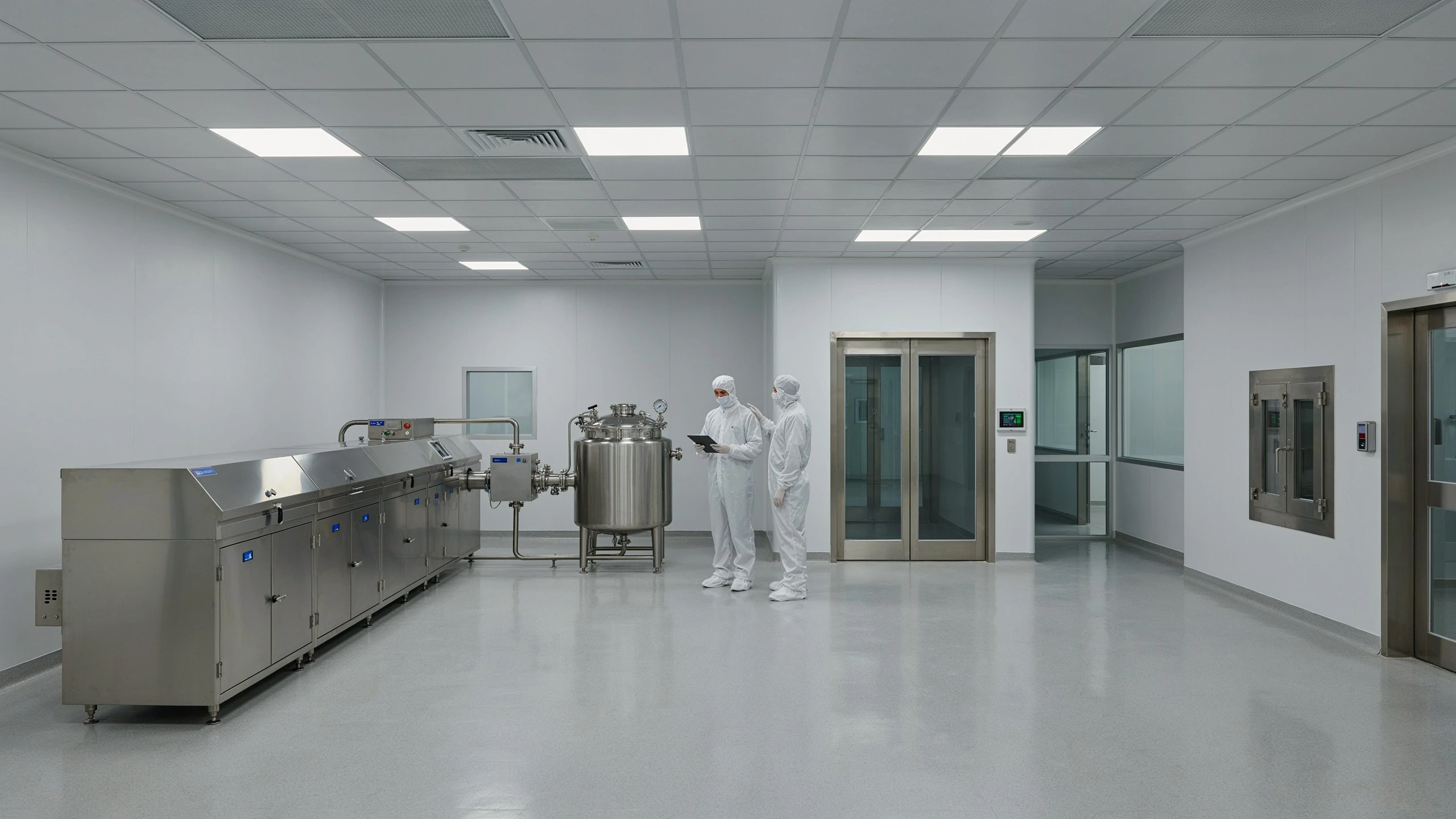
Overview
ISO 14644 Cleanroom Design is the international standard for cleanrooms and associated controlled environments, providing the framework for designing, classifying, and operating cleanrooms in pharmaceutical and ATMP manufacturing. This standard is recognized globally as the benchmark for cleanroom design and operations. This guide explores the principles of ISO 14644 cleanroom design and the training programs available to help you implement these standards effectively.
Key Principles of ISO 14644 Cleanroom Design
ISO 14644 Cleanroom Design is based on several key principles that ensure controlled environments meet regulatory requirements. These include:
- Classification – defining cleanroom cleanliness levels based on airborne particle concentration
- Design – ensuring cleanroom layout, materials, and systems support contamination control
- Testing – verifying that cleanrooms meet their specified classification
- Monitoring – ongoing assessment to ensure continued compliance
- Operations – procedures for maintaining cleanroom integrity
Regulatory Frameworks Integrating ISO 14644
ISO 14644 Cleanroom Design is integrated with other critical regulatory frameworks, including:
- EU GMP Annex 1 – Manufacture of Sterile Medicinal Products
- FDA Guidance – Sterile Drug Products Produced by Aseptic Processing
- WHO GMP – For sterile pharmaceutical products
- PIC/S GMP Guide
Understanding these interconnections is essential for comprehensive cleanroom compliance.
Detailed Course Breakdown
Course 1: Cleanroom Design & Operations (ISO 14644 Focused)
This comprehensive training program provides an in-depth examination of the ISO 14644 series of standards, recognized globally as the benchmark for cleanroom design, classification, and operations.
Scope: Tailored for the life sciences industry, the curriculum integrates technical requirements with practical applications, highlighting the essential role of contamination control in safeguarding patient safety and product quality. The program covers topics ranging from the historical development of cleanrooms to advanced concepts such as isolator technology and energy efficiency.
Description of Modules: The curriculum covers:
- Introduction to Cleanrooms and their historical development
- ISO 14644 Standards – classification, testing, and monitoring
- Cleanroom Design principles and best practices
- Cleanroom Operations – gowning, behavior, and workflows
- Contamination Control – microbial and particulate control strategies
- Environmental Monitoring – program design and data interpretation
- Isolator Technology and advanced containment systems
- Energy Efficiency in cleanroom operations
Target Audience:
- Quality Assurance (QA) Professionals
- Validation Engineers and Specialists
- Manufacturing and Production Personnel
- Facility and Engineering Staff
- Regulatory Affairs Professionals
- Environmental Monitoring and Microbiology Specialists
Pricing: $249.00 with group discounts available.
FAQ:
- What is the ISO 14644 series? The ISO 14644 series is a set of international standards for cleanrooms and associated controlled environments, covering classification, testing, and monitoring.
- What is the difference between ISO 14644-1 and ISO 14644-2? ISO 14644-1 covers cleanroom classification based on particle concentration, while ISO 14644-2 covers monitoring to maintain compliance.
- How are cleanrooms classified under ISO 14644? Cleanrooms are classified based on the maximum concentration of airborne particles per cubic meter for specified particle sizes.
- What is the relationship between ISO 14644 and EU GMP Annex 1? EU GMP Annex 1 references ISO 14644 for cleanroom classification and testing requirements.
- Why is cleanroom design critical for pharmaceutical manufacturing? Proper cleanroom design ensures contamination control, protecting product quality and patient safety.
Enroll Now: https://www.gxptrainings.com/courses/cleanroom-design-operations-iso-14644-focused/
Course 2: Certified Cleanroom Operations and Validation Professional
This comprehensive training program provides a deep and complete understanding of cleanroom technology, from fundamental principles to advanced operational and regulatory requirements.
Scope: The program guides participants through the entire lifecycle of a cleanroom—from initial design and construction through commissioning, qualification, validation, routine operation, monitoring, inspection, and requalification. It integrates essential standards such as ISO 14644, EU GMP Annex 1, FDA 21 CFR Parts 210 and 211, ISO 19011 auditing guidelines, and industry best practices in Good Engineering Practice (GEP) and HVAC design.
Description of Modules: The curriculum covers:
- Introduction to Cleanroom Technology and fundamental principles
- Cleanroom Design and Construction – requirements and best practices
- Commissioning, Qualification, and Validation – strategies and documentation
- Cleanroom Operations – routine operations and monitoring
- Environmental Monitoring – program design and data interpretation
- Regulatory Requirements – EU GMP Annex 1, FDA, and ISO standards
- Auditing Cleanrooms – principles and techniques
- Requalification – maintaining cleanroom compliance
Target Audience:
- Quality Assurance Professionals
- Validation Engineers
- Commissioning Engineers
- Manufacturing and Production Personnel
- Facility and Engineering Staff
- Regulatory Affairs Professionals
- Microbiologists and Environmental Monitoring Specialists
- Internal and Second-Party Auditors
Pricing: Competitive pricing with group discounts available.
FAQ:
- What is the role of cleanroom design in contamination control? Cleanroom design ensures that facilities are constructed to minimize contamination risks, with appropriate materials, airflow, and workflows.
- How does ISO 14644 support cleanroom validation? ISO 14644 provides the technical requirements for cleanroom testing and monitoring that are essential for validation.
- What is the importance of HVAC design in cleanrooms? HVAC systems control temperature, humidity, and airborne particles, which are critical for maintaining cleanroom classification.
- How do you select cleanroom materials? Materials should be non-shedding, easy to clean, and resistant to disinfectants to support contamination control.
- What are the key considerations for cleanroom layout? Layout should support workflows, minimize cross-contamination, and ensure appropriate segregation of activities.
Enroll Now: https://www.gxptrainings.com/courses/certified-cleanroom-operations-and-validation-professional/
Course 3: ATMPs Manufacturing and Facility Design
This comprehensive training program offers an in-depth exploration of the complex and rapidly evolving field of Advanced Therapy Medicinal Product (ATMP) manufacturing.
Scope: Designed to bridge the gap between scientific innovation and regulatory compliance, the curriculum guides participants through the entire product lifecycle, from foundational science and supply chain logistics to the critical principles of facility and cleanroom design. The program places a strong emphasis on the practical application of Quality Risk Management and Contamination Control Strategies.
Description of Modules: The curriculum covers 11 comprehensive sections:
- Introduction to ATMPs – foundational science and product types
- Regulatory Framework – EU, FDA, and ICH requirements
- ATMP Supply Chain – vein-to-vein logistics and cold chain management
- Facility Design – cleanroom requirements for ATMP manufacturing
- Cleanroom Design – ISO 14644 and EU GMP Annex 1 requirements
- Contamination Control – strategies for living products
- Quality Risk Management – ICH Q9 principles
- Process Development – from bench to bedside
- Quality Systems – ICH Q10 and pharmaceutical quality systems
- Regulatory Submissions – preparing for ATMP approvals
- Case Studies – real-world ATMP manufacturing examples
Target Audience:
- Process Development Scientists and Engineers
- Quality Assurance and Quality Control Professionals
- Facility and Plant Engineers
- Regulatory Affairs Specialists
- Supply Chain and Logistics Managers
- Technical Operations and Manufacturing Leadership
- Clinical Development Professionals
- Academic Researchers
Pricing: Competitive pricing with group discounts available.
FAQ:
- How does ISO 14644 apply to ATMP facility design? ISO 14644 provides the cleanroom classification and testing requirements for ATMP manufacturing facilities.
- What are the unique cleanroom design challenges for ATMPs? ATMPs require flexible facilities that can accommodate multiple product types and the “batch-of-one” paradigm.
- What is the role of Quality Risk Management in ATMP facility design? Quality Risk Management (ICH Q9) guides decisions on facility design and contamination control strategies.
- How does EU GMP Annex 1 apply to ATMP manufacturing? EU GMP Annex 1 provides requirements for sterile manufacturing that apply to many ATMP processes.
- What is the importance of facility design for ATMP compliance? Proper facility design ensures contamination control and regulatory compliance for ATMP manufacturing.
Get Your Team Offer
For organizations looking to enroll multiple participants, we offer specialized team packages and volume discounts. Please reach out to our partnership team to discuss your specific needs and scores.
Contact Us: https://www.gxptrainings.com/contact-us/
Authors