
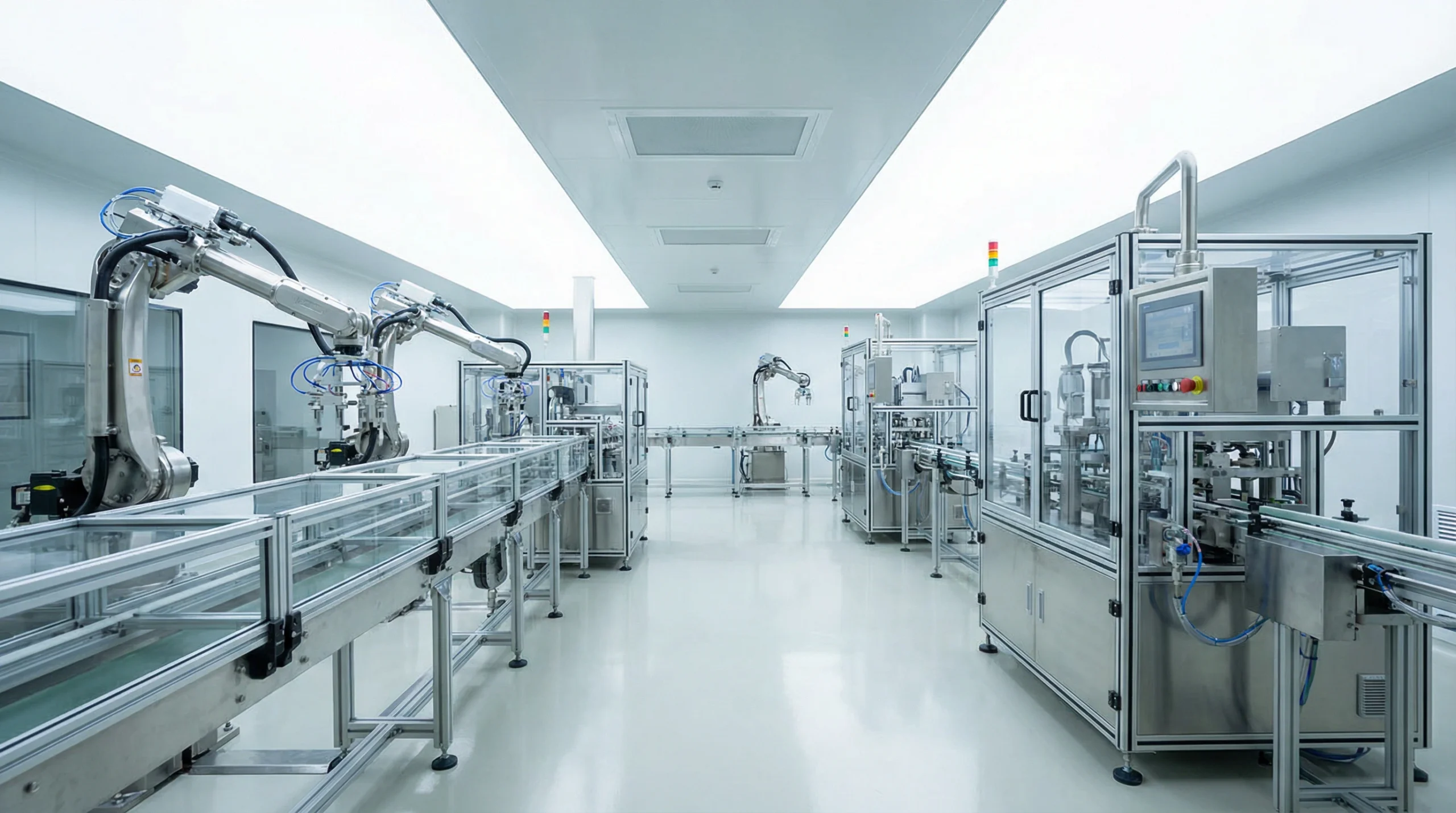
In the pharmaceutical industry, quality is a legal requirement rather than merely an aspirational goal. For organizations operating within or exporting to Europe, adherence to EU Good Manufacturing Practice (EU GMP) represents the definitive standard. Officially outlined in EudraLex Volume 4, these guidelines govern all aspects of production, from raw material sourcing to final product release.
For Quality Assurance managers, Production staff, and Qualified Persons, a thorough understanding of the structure of EU GMP is essential. This high-level guide outlines the core principles, organizational structure, and critical focus areas required to maintain compliance and ensure patient safety.
Overview of EU GMP and Its Significance
EU GMP is a set of legally binding principles for the manufacture and control of medicinal products for human and veterinary use. The primary objective is to manage risks that cannot be mitigated solely by testing the final product, such as cross-contamination, mix-ups, and deviations.
Compliance assures that products:
- Are fit for their intended use.
- Comply with their Marketing Authorization.
- Do not place patients at risk due to inadequate safety, quality, or efficacy.
The Three-Pillar Structure of EudraLex Volume 4
- Part I: Basic Requirements for Medicinal Products
This section covers the GMP principles for finished products across nine chapters, including Personnel, Premises, Documentation, Production, and Quality Control. - Part II: Basic Requirements for Active Substances
Based on ICH Q7, this part applies specifically to the manufacture of Active Pharmaceutical Ingredients (APIs), covering processes from raw materials to the finished substance. - Part III: GMP Related Documents
This collection provides supporting guidance, including the critical ICH Q9 (Quality Risk Management) and ICH Q10 (Pharmaceutical Quality System) documents.
The Annexes: The Devil in the Details
The framework is further defined by over 19 annexes. The most critical for advanced manufacturing include:
- Annex 1: Manufacture of Sterile Medicinal Products.
- Annex 2: Manufacture of Biological Substances.
- Annex 11: Computerized Systems.
- Annex 16: Certification by a Qualified Person (QP) and Batch Release.
Key Principles You Must Master
Although the complete guide is comprehensive, compliance depends on mastery of several core concepts.
1. The Pharmaceutical Quality System (PQS)
The PQS is the cornerstone of GMP. It is the management system that directs and controls a pharmaceutical company regarding quality. Senior management holds the ultimate responsibility for its effectiveness.
- Integration: The PQS integrates GMP, Quality Control (QC), and Quality Risk Management (QRM).
- Product Quality Review (PQR): An essential output is the annual Product Quality Review, which verifies process consistency and identifies areas for improvement.
2. Quality Risk Management (QRM)
Based on ICH Q9, Quality Risk Management (QRM) is a systematic, science-based process for assessing, controlling, communicating, and reviewing risks. The guiding principle is that the level of effort should correspond to the level of risk. This approach applies to deviation management, supplier audits, and validation activities.
3. The Critical Role of Personnel
EU GMP requires the appointment of specific, independent key personnel: the Head of Production, the Head of Quality Control, and the Qualified Person (QP).
- Independence: The QC department must be independent from Production to ensure unbiased decision-making.
- Qualified Person (QP): The QP holds a distinct legal responsibility to certify that each batch of a medicinal product has been manufactured and tested in accordance with applicable laws and its marketing authorization prior to release for sale. This responsibility cannot be delegated to individuals who are not QPs.
- Training: All personnel must receive initial and continuous GMP training tailored to their roles. Training effectiveness must be assessed and documented.
4. Premises, Equipment, and Contamination Control
The physical environment is of paramount importance, particularly for the manufacture of sterile products.
- Cleanroom Classifications: EU GMP defines Grades A, B, C, and D for cleanrooms, each with strict limits for particle counts and microbial contamination. Grade A is the critical zone for aseptic filling.
- Cross-Contamination: A risk-based approach is implemented to prevent cross-contamination through technical measures such as dedicated facilities and closed systems, as well as organizational measures, including campaign production and validated cleaning procedures.
5. Documentation and Data Integrity
Comprehensive documentation is essential and must adhere to the ALCOA+ principles:
- Attributable
- Legible
- Contemporaneous
- Original
- Accurate
- Plus: Complete, Consistent, Enduring, and Available.
Batch records, standard operating procedures (SOPs), and specifications must be meticulously controlled. All data, particularly electronic records as specified in Annex 11, must be secured with comprehensive audit trails.
6. Quality Control and Stability
The QC lab is the final gatekeeper. Responsibilities include:
- Out-of-Specification (OOS) Investigations: Any OOS result requires prompt, documented investigation to determine the root cause and assess the impact on batch quality.
- Stability Programs: Ongoing stability studies monitor product quality throughout the shelf life, ensuring that labelled storage conditions remain valid.
Common Challenges in EU GMP Compliance
Despite the existence of clear guidelines, organizations frequently encounter challenges such as:
- Interpreting Annex 1: The revised Annex 1 on sterile manufacturing introduces stringent requirements for contamination control strategies, barrier systems, and monitoring.
- Data Integrity: Ensuring that electronic data is complete and tamper-proof remains a top inspection finding.
- Keeping Training Current: Regulations evolve, and maintaining a consistently trained workforce is a significant operational challenge.
How to Stay Ahead: The Role of Expert Training
Given the complexity of EudraLex Volume 4, theoretical knowledge alone is insufficient. Practical, application-based training is necessary to translate these principles into daily operations. Effective training enables staff to identify risks, implement corrective and preventive actions (CAPA) effectively, and maintain inspection readiness.
Master EU GMP with GxP Trainings
Navigating EU GMP requires a clear, structured understanding. Preparation for inspections, implementation of new quality systems, or onboarding of new personnel is most effectively achieved through expert-led instruction.
www.gxptrainings.com offers comprehensive, up-to-date training programs specifically designed to clarify EU GMP requirements. These courses address all modules referenced in this guide, from the fundamentals of the Pharmaceutical Quality System to the advanced requirements of Annex 1 for sterile manufacturing.
Equip teams with the knowledge required to ensure compliance and safeguard patient safety. For further information, visit www.gxptrainings.com to explore the detailed EU GMP training curriculum.