
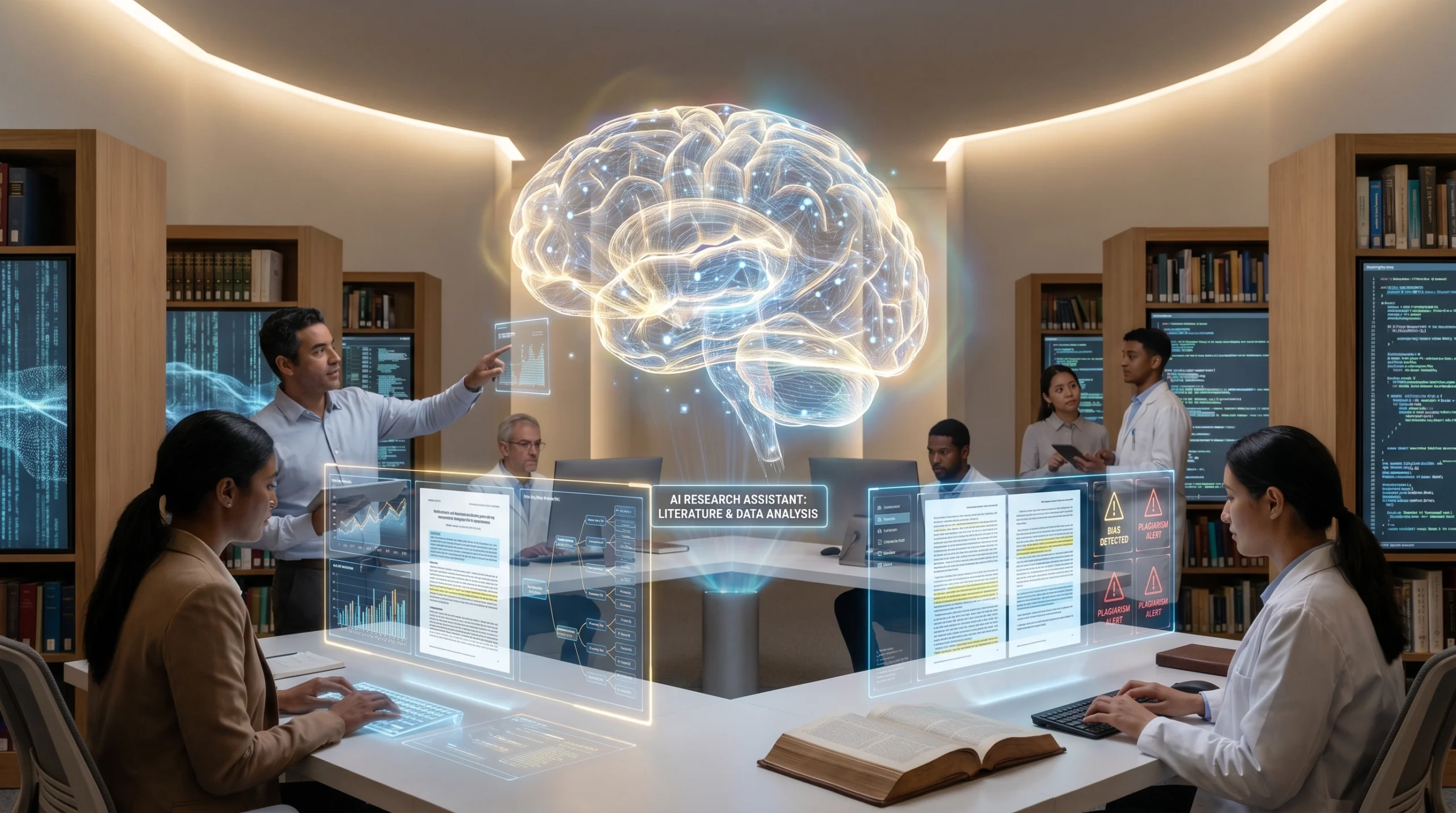
If you work in Quality Assurance, Manufacturing, Clinical Operations, or Regulatory Affairs, you have likely noticed that artificial intelligence is no longer a future concept. It is already showing up in inspection systems, deviation investigations, and even patient recruitment tools.
But here is the real question: How do you validate it under GMP, GCP, or GLP?
At https://www.gxptrainings.com/, we focus on exactly that. No abstract theory. No Python coding for the sake of coding. Just practical, real-world AI applications for regulated life sciences professionals.
Let us walk through what is actually working right now.
The Shift That Changes Everything
Traditional quality assurance is descriptive. You measure parameters. You test attributes. You react after something goes out of spec. Statistical process control charts tell you something has changed, but often after the fact.
Predictive quality flips this model.
With AI, you can anticipate non-conformances before they happen. By analyzing historical batch data, equipment sensors, raw material attributes, and environmental monitoring data, an AI model learns patterns that precede deviations.
Here is a concrete example:
A model might learn that when vibration on a filling pump exceeds 0.2 millimeters per second and room humidity rises above 55%, the probability of a stopper defect increases from 0.5% to 12% within the next two hours.
Instead of investigating deviations after they happen, you investigate warnings before they happen. Instead of writing CAPAs for past failures, you prevent the failures from occurring.
https://www.gxptrainings.com/courses/
What Real Performance Data Looks Like
We have analyzed aggregated data from smart manufacturing operations. The improvements are substantial, not theoretical.
| Metric | Traditional Operations | AI-Enabled Operations | Improvement |
| Defect rate | 4.9% | 2.5% | 48.9% |
| Unplanned downtime | 11% | 5.8% | 47.8% |
| Inventory turns | 14x per year | 19x per year | 34.8% |
| Overall equipment effectiveness | 73.6% | 85.5% | 16.2% |
These numbers come from actual deployments on fill-finish lines, tablet presses, and sterile injectable facilities. This is not vendor marketing.
Visual Inspection: Where AI Shines Immediately
Visual inspection is a prime candidate for AI augmentation. Humans inspecting vials, tablets, or medical devices for defects tire quickly. Performance varies across shifts. Fatigue and distraction contribute to errors.
AI vision systems, once properly trained, perform consistently. They can detect subtle defects that humans miss.
But here is the critical point for GxP professionals:
You need tens of thousands of labeled images for training. A general rule is that you need at least ten times as many training examples as the number of parameters in your model. For deep learning, this often means hundreds of thousands or millions of examples.
If your team has only 500 labeled images, you do not have enough volume. The model will overfit. It will memorize the training data rather than learn general patterns.
The Explainability Problem Nobody Ignores
Here is the challenge that trips up most organizations.
The most accurate AI models are often the least explainable. A deep neural network might achieve 99.9% accuracy detecting product defects but cannot easily explain why any specific product was rejected. A simple decision tree might achieve only 95% accuracy but can show exactly which variable and threshold led to the decision.
So what do you do?
A practical approach we teach at GxP Trainings is this:
- Low-risk decisions (internal process monitoring): Black box models may be acceptable
- High-risk decisions (batch release, patient diagnosis): Explainability is essential
For high-risk decisions, use complex AI for screening and prioritization, then have a human reviewer make the final decision using the AI’s output as one input among many.
Predictive Maintenance under GMP
Equipment failures are a major source of GMP deviations. Traditional maintenance is either reactive (fix after failure) or scheduled (replace parts at fixed intervals regardless of condition).
Predictive maintenance uses AI to determine the optimal time for intervention.
Sensors on equipment continuously measure vibration, temperature, current draw, and pressure. An AI model learns the normal patterns. When deviations occur, the model estimates remaining useful life and recommends maintenance before failure.
Expected results from predictive maintenance programs:
- Reduction in unplanned downtime: 20 to 50%
- Reduction in maintenance costs: 10 to 30%
- Extension of equipment life: 10 to 20%
- Reduction in spare parts inventory: 20 to 30%
Validating AI Systems under GxP
This is where traditional software validation frameworks fall short.
Traditional validation assumes requirements are fixed and software behavior is deterministic. AI systems learn from data. Their behavior can change when retrained.
A practical AI validation approach must include:
- Define the intended use with precise boundaries
- Document training data provenance and characteristics
- Test the model on holdout data not used in training
- Test the model on subsets defined by relevant stratifiers (line, shift, operator, lot, patient population)
- Establish performance thresholds for acceptance
- Define a monitoring plan for model performance over time
- Plan for model retraining and revalidation when new data is added
Special considerations for deep learning:
- The trade-off between accuracy and explainability must be documented and justified
- Black box models may require additional oversight mechanisms
- Model updates must follow change control procedures
In a GMP environment, data integrity is already a regulatory requirement. The same principles apply to training data for AI systems. You must be able to prove that your training data is accurate, complete, and unaltered.
Bias Detection Is Not Optional
For quality and GxP professionals, bias detection is a requirement, not a recommendation.
Your AI validation plan must include a formal bias assessment. Test the model on subsets defined by relevant stratifiers:
- Production line
- Shift
- Operator
- Raw material lot
- Patient age, sex, and ethnicity
Why this matters:
If your training data underrepresents certain populations or conditions, your AI will perform poorly exactly where you need it most. The system reflects whatever is present in the training data. That is the “bias in, bias out” principle.
The Five Step Model of Decision Automation
Not every AI application needs the same level of human oversight. We classify AI applications by how much decision authority is delegated to the machine versus retained by humans.
| Level | Name | Description | Life Sciences Example |
| 1 | Assisted | AI supports humans; human decides | AI highlights suspicious regions on a medical image for radiologist review |
| 2 | Partial | AI handles some decisions; human handles others | QC system automatically accepts clear passes, escalates uncertain cases |
| 3 | Verified | Human decides; AI checks the decision | Human approves batch; AI independently reviews same data for cross-validation |
| 4 | Delegated | Human defines boundaries; AI executes | Cleanroom HVAC adjusts automatically based on particle counts |
| 5 | Autonomous | AI decides and acts without human intervention | Future application: AI rejects batches and removes them from the line without review |
The appropriate level depends on the risk of a wrong decision, the cost of human involvement, and the AI system’s proven performance.
What This Means for Your Organization
You do not need to start with ambitious enterprise-wide deployments. The first AI project should be small, well-defined, and low risk. Choose a problem that is important enough to matter but not so critical that failure is catastrophic. Ensure high-quality labeled data is available. Define clear success metrics before starting.
Successful pilots build organizational confidence. Failed pilots, when managed properly, provide valuable learning without major damage.
The organizations that succeed with AI are not the ones with the most complex models. They are the ones who rigorously validate, thoroughly document, and keep human experts in the loop for high-risk decisions.
About GxP Trainings
GxP Trainings offers self-directed professional training programs for life sciences professionals. Our AI curriculum covers validation under GMP, GCP, and GLP; real-world case studies with actual performance statistics; bias assessment frameworks; and model monitoring plans. No coding required. No hype.
📧 Contact us: info@gxptrainings.com
🌐 Website: www.gxptrainings.com
Contact us with your questions or visit our website to learn more about our training programs and corporate solutions.