Program Scope
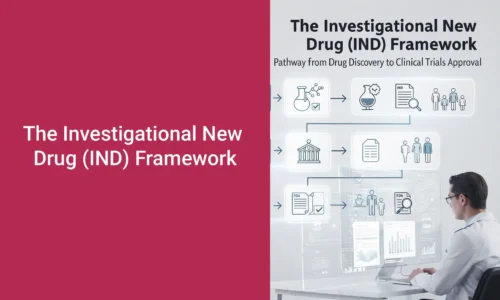
This training program provides a comprehensive, end-to-end understanding of the Investigational New Drug (IND) framework as regulated by the U.S. Food and Drug Administration. The IND is not merely an application; it is a regulatory pathway and a legal status that governs the entire lifecycle of an investigational drug from the moment it is first proposed for human testing until it is either approved for marketing or the investigation is terminated.
The scope of this program covers the full IND lifecycle, including the legal basis for the IND exemption, the detailed preparation and submission of the initial IND application package (with specific emphasis on the structure and content of each section), the step-by-step submission process flow to FDA, the roles and responsibilities of all key parties, safety monitoring and reporting requirements, recordkeeping and inspection readiness, expanded access pathways, and specific CGMP requirements for Phase 1 investigational drugs.
This program is built upon the following sections of the Code of Federal Regulations (CFR) and FDA Guidance:
- 21 CFR Part 11: Electronic Records; Electronic Signatures
- 21 CFR Part 50: Protection of Human Subjects (Informed Consent)
- 21 CFR Part 54: Financial Disclosure by Clinical Investigators
- 21 CFR Part 56: Institutional Review Boards (IRBs)
- 21 CFR Part 210 and 211: Current Good Manufacturing Practice (CGMP) for Finished Pharmaceuticals
- 21 CFR Part 312: Investigational New Drug Application
- FDA Guidance (July 2008): CGMP for Phase 1 Investigational Drugs
Learning Objectives
Upon successful completion of this program, learners will be able to:
- Explain the legal purpose of the IND exemption and when an IND is required versus exempt.
- Describe the three phases of clinical investigation under an IND and the objectives of each phase.
- Identify each required component of the IND application package and the specific information required in each section.
- Follow the step-by-step process flow for submitting an IND to FDA and understand the 30-day review timeline.
- Distinguish the separate and overlapping responsibilities of the Sponsor, the Clinical Investigator, and the IRB.
- Apply the rules for obtaining and documenting informed consent and for ensuring IRB review and approval.
- Recognize reportable safety events and follow the correct procedures for IND safety reports and annual reports.
- Comply with recordkeeping, record retention, and inspection requirements for both Sponsors and Investigators.
- Apply the specific CGMP recommendations for Phase 1 investigational drugs.
- Describe the criteria and submission pathways for expanded access.
- Understand the grounds for FDA administrative actions including clinical holds, termination, and investigator disqualification.
Target Audience
This training is intended for professionals who work with or oversee clinical trials conducted under an IND. The target audience includes the following:
- Clinical Research Associates (CRAs) and Clinical Trial Monitors
- Clinical Research Coordinators (CRCs)
- Regulatory Affairs Specialists and Managers
- Medical Writers and Clinical Document Specialists
- Principal Investigators and Sub-Investigators
- Sponsor and Contract Research Organization (CRO) personnel
- Quality Assurance and Quality Control professionals
- Research Compliance Officers
- Manufacturing personnel involved in Phase 1 investigational drug production
- Institutional Review Board (IRB) administrators and members
Certification
Learners who successfully complete the program will receive a dated, traceable certificate that provides verifiable proof of their achievement for professional records.